Every few years, thick blankets of smoky haze roll across Southeast Asia, turning skies an ominous orange and triggering widespread health alerts. The current environmental crisis is hitting the region hard. Driven by intense forest and peatland fires in Indonesia—particularly across Sumatra and Borneo—the heavy smoke has severely degraded regional air quality, exposing millions of people to hazardous pollutants and sparking an urgent public health crisis.
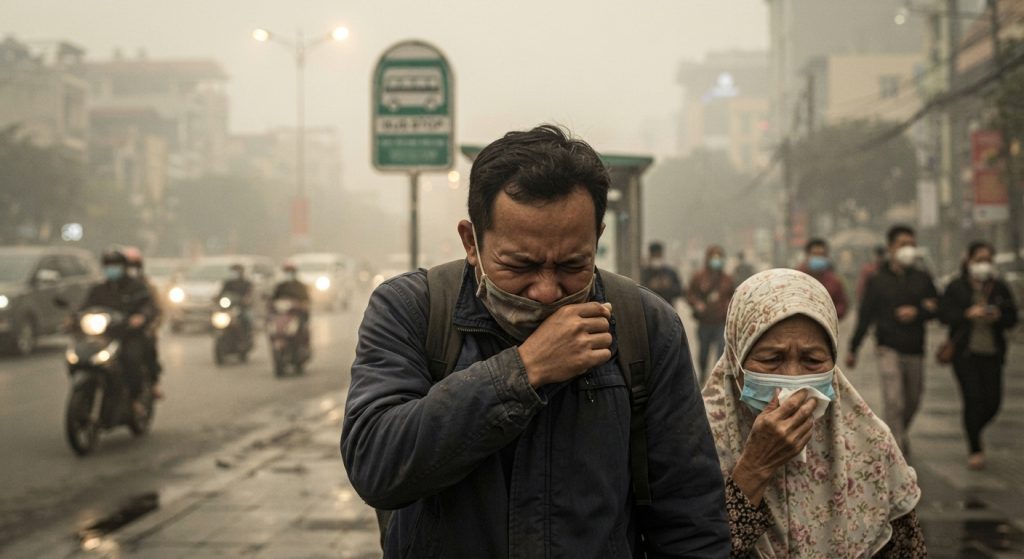
Understanding the profound health risks of wildfire haze, alongside the realities of the ongoing situation, highlights why clean air is essential for public survival.
The Anatomy of Haze: What Makes It Dangerous?
Wildfire and peatland smoke is far more than just ordinary dust or smoke from a campfire. It is a complex, toxic mixture of microscopic particulate matter (specifically PM2.5), carbon monoxide, nitrogen oxides, and various volatile organic compounds.
- The Threat of PM2.5: These tiny particles are less than 2.5 micrometers in diameter—about 30 times smaller than the width of a human hair. Because they are so minuscule, they bypass the body’s natural defense filters in the nose and upper airways, plunging deep into the lungs and even passing directly into the bloodstream.
Immediate and Long-Term Health Effects
Exposure to high concentrations of haze poses severe risks to human health, affecting virtually every major organ system, particularly the respiratory and cardiovascular networks.
- Respiratory Distress: The lungs bear the immediate brunt of toxic air. Inhalation of particulate matter causes acute inflammation in the airways, triggering severe coughing, wheezing, shortness of breath, and exacerbating chronic conditions like asthma and chronic obstructive pulmonary disease (COPD).
- Cardiovascular Strain: When PM2.5 particles enter the bloodstream, they induce systemic inflammation, oxidative stress, and blood vessel constriction. This significantly increases the risk of heart attacks, strokes, and acute cardiovascular events, especially in older adults and individuals with pre-existing heart disease.
- Eye and Skin Irritation: The chemical components in the haze frequently cause burning eyes, conjunctivitis, runny noses, and skin rashes.
- Systemic Vulnerability: Prolonged exposure compromises overall immune health, leaving populations more susceptible to secondary infections. Children, pregnant individuals, the elderly, and outdoor workers face the highest risk of severe complications.
[ How does Haze hurt the body ]
The Current Crisis: Indonesia’s Record Fires and Regional Impact
The ongoing environmental emergency in Indonesia has magnified these health threats on a massive scale. Intensified by a powerful El Niño-driven dry season and human-induced land clearance, massive blazes have scorched hundreds of thousands of hectares of forest and carbon-rich peatlands, primarily on the islands of Sumatra and Borneo.
- Surging Health Cases: The heavy smoke plumes have severely impacted domestic populations. Millions of people have faced direct exposure across multiple provinces, causing a sharp, alarming surge in acute respiratory infections requiring medical intervention.
- Disrupted Daily Life: To protect children from toxic air quality, authorities in affected regions have repeatedly had to close schools or shift students to remote learning.
- Transboundary Haze: Because wind carries the dense smoke across borders, the environmental fallout has triggered health warnings, reduced visibility, and strained diplomatic and technical cooperation across neighboring countries like Malaysia and Singapore as air quality indexes plunge into unhealthy and hazardous zones. With officials warning that dry weather patterns could prolong the fire season, regional health vigilance remains at an all-time high.
How to Protect Yourself When Haze Hits
When air quality reaches unhealthy levels, minimizing exposure is vital:
- Check Air Quality Daily: Monitor local Air Quality Index (AQI) reports before heading outdoors.
- Stay Indoors and Seal Spaces: Keep windows and doors tightly shut to prevent outdoor smoke from seeping into living areas. Use air purifiers equipped with HEPA filters if available.
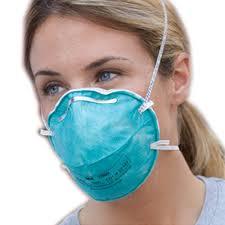
- Wear Proper Masks: If venturing outside is unavoidable, wear a tightly sealed N95 or KN95 respirator mask rather than a standard cloth mask, as ordinary masks cannot block microscopic PM2.5 particles. [ Buy KN95 Mask Here ]
- Prioritize Hydration: Drink plenty of water to help your body flush out irritants, and seek immediate medical care if you experience persistent chest pain, severe shortness of breath, or prolonged dizziness.
Leave a Reply