A marathon is not simply a long race; it is an extreme physiological event that pushes the human body to its absolute limits. While crossing the finish line is a monumental achievement, the journey to the start line must be paved with months of disciplined, systematic preparation.
“Running a marathon without adequate preparation can trigger severe health risks, from sudden cardiac strain to exertional rhabdomyolysis and kidney failure. Discover why structured training is a lifesaving necessity before tackling 26.2 miles.”
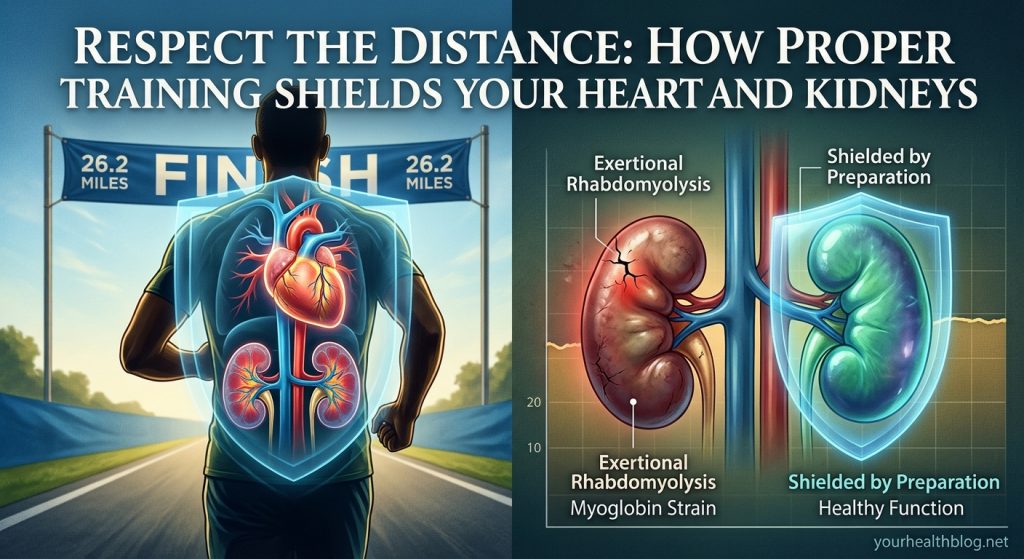
A lack of proper training doesn’t just result in a poor finish time; it exposes a runner to severe, sometimes fatal, health risks. This reality was tragically highlighted by recent events at the New York City Marathon, where a 24-year-old runner collapsed and died of rhabdomyolysis, a rare but devastating condition linked to extreme muscle breakdown.
Here is an indepth look at why comprehensive training is essential to protect your health during a competition.
1. Cardiovascular Adaptation: Strengthening the Engine
The heart must undergo significant physiological remodeling to cope with four or more hours of sustained exertion.
- Proper Training Effect: A structured plan builds cardiovascular endurance. The heart gets better at pumping more blood per beat, and muscles get more efficient at extracting oxygen.
- Without Proper Training: Inadequately prepared runners put immense, immediate strain on their heart muscle. If there is an undiagnosed underlying heart condition—even in seemingly fit individuals—this acute stress can trigger sudden cardiac arrest or deadly arrhythmias.
2. Metabolic Remodeling: Training the Fuel System
The body does not have enough stored sugar (glycogen) to run 26.2 miles. It must be trained to efficiently burn fat as a secondary fuel source.
- Proper Training Effect: Long, slow runs teach the metabolic system to conserve glycogen and utilize fat stores. Runners also practice “gut training,” learning how to consume and absorb fuel (gels, chews) during movement without experiencing gastrointestinal distress.
- Without Proper Training: Unprepared runners deplete their glycogen stores within the first 18–20 miles, leading to the dreaded “wall”—a sudden collapse in energy, dizziness, and cognitive confusion that is a sign of acute metabolic crisis.
3. Structural Resilience: Fortifying Bones and Muscles
Running 26.2 miles on pavement subjects the body to thousands of high-impact repetitions. Muscles, tendons, and bones must be gradually strengthened to withstand this force.
- Proper Training Effect: Progressive mileage increases bone density and thickens connective tissues, making them resilient to stress.
- Without Proper Training: The structural system fails. This manifests as acute joint damage, ligament tears, tendonitis, and—most dangerously—catastrophic muscle failure.
4. The Deadly Risk: Exertional Rhabdomyolysis
This condition is one of the most severe risks of extreme, unaccustomed exertion.
- The Mechanism: When muscles are pushed far beyond their trained capacity, the muscle fibers literally rupture and die. They release a protein called myoglobin into the bloodstream.
- The Danger: The kidneys are responsible for filtering this myoglobin. However, myoglobin is toxic to kidney tissue and, in such large quantities, causes the kidneys to “clog up” and shut down entirely, leading to acute kidney failure.
- The Lesson: This is often not about an underlying heart issue, but about pushing a body system (the skeletal muscles) past its failure point. Proper training gradually increases muscle toughness, preventing this catastrophic level of breakdown.
5. Hydration, Electrolyte, and Temperature Regulation
A marathon is often fought against the elements. The body must be efficient at cooling itself.
- Proper Training Effect: Runners use their training phase to learn their sweat rates and practice precise hydration and electrolyte replacement strategies tailored to different weather conditions.
- Without Proper Training: Runners frequently suffer from life-threatening conditions:
- Hyponatremia: Overdrinking plain water, which dilutes sodium levels in the blood, causing cells to swell, including those in the brain.
- Hyperthermia (Heatstroke): The body’s cooling system fails, causing internal temperature to rise to deadly levels.
The Bottom Line
Training for a marathon is not a suggestion; it is a life-saving necessity. The latest news serves as a grim reminder that endurance sports are non-negotiable environments. Respecting the distance means respecting the time it takes to build a body resilient enough to finish it safely. Always consult with a physician and use a structured, progressive training program before attempting a marathon.
Leave a Reply