One of the most common and concerning myths surrounding diabetes management is the belief that taking insulin harms your kidneys. For many newly diagnosed patients or those facing a transition to insulin therapy, this fear can lead to hesitation, delayed treatment, and poor blood sugar control.
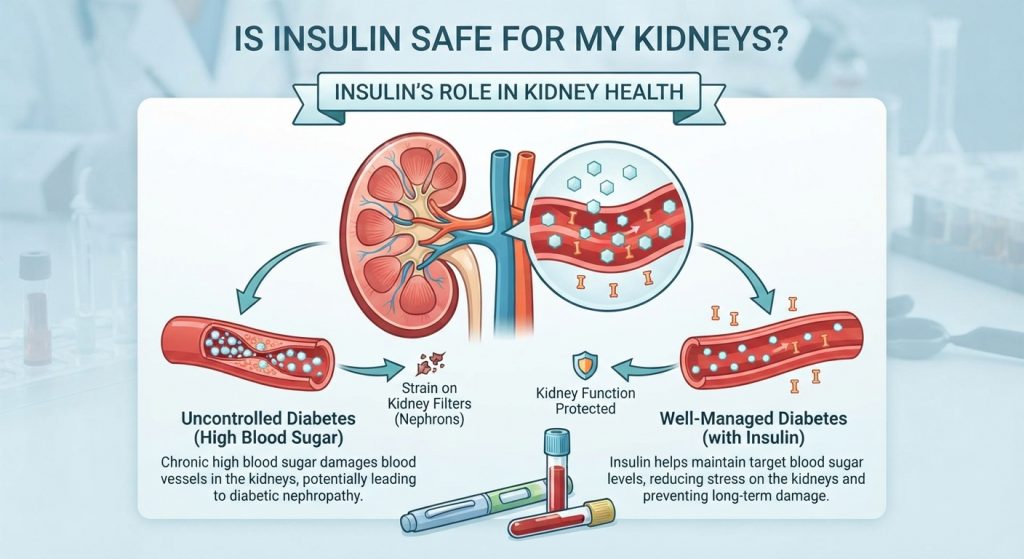
The short answer is no, injecting insulin does not damage your kidneys. In fact, doing the exact opposite—keeping your blood sugar well-controlled with insulin when prescribed—is one of the most effective ways to protect your kidneys over the long term.
Here is a breakdown of where this misconception comes from, how insulin actually interacts with your body, and what really causes kidney damage in diabetes.
Where Does the Myth Come From?
The confusion usually stems from the timing of kidney disease diagnosis in people with diabetes.
- Late Introductions: Historically, insulin was often prescribed as a “last resort” when oral medications were no longer working, or after a patient had lived with uncontrolled diabetes for many years.
- The Progression of Time: By the time a person started insulin, early-stage kidney damage (diabetic nephropathy) might have already quietly developed due to years of high blood sugar.
- False Cause and Effect: Because patients noticed kidney issues appearing around the same time or after they started insulin therapy, many mistakenly blamed the medication rather than the underlying, long-term effects of high blood glucose.
The Real Culprit: High Blood Sugar, Not Insulin
To understand why insulin gets a bad reputation, it helps to look at what high blood sugar (hyperglycemia) does to your kidneys.
Your kidneys are complex filtration systems made up of millions of tiny blood vessels (glomeruli). These vessels filter waste products and extra fluid from your blood into your urine.
When your blood sugar remains consistently high over months and years:
- Vessel Damage: The excess sugar makes these delicate blood vessels stiff, narrow, and leaky.
- Overwork: The kidneys are forced to filter more blood than normal, putting immense strain on the filtration units.
- Scarring: Over time, this strain leads to scarring (glomerulosclerosis), causing the kidneys to lose their ability to filter waste effectively. This condition is known as diabetic kidney disease.
How Insulin Protects Your Kidneys
Insulin is a vital hormone that helps transport glucose from your bloodstream into your cells to be used for energy. When injected properly as part of a diabetes treatment plan, insulin helps:
- Normalize Blood Glucose: By bringing high blood sugar levels down into a safe, target range, insulin removes the toxic stress placed on your kidney’s blood vessels.
- Slow Disease Progression: Good glycemic control dramatically lowers the risk of developing diabetic kidney disease or slows its progression if it has already begun.
Managing Kidney Health with Diabetes
While insulin itself is safe for your kidneys, managing overall kidney health requires a comprehensive approach:
- Regular Screening: If you have diabetes, your doctor should check your kidney function annually through a simple blood test (to measure eGFR) and a urine test (to check for albumin, a type of protein that leaks into urine when kidneys are strained).
- Blood Pressure Control: High blood pressure and high blood sugar are a damaging combination for the kidneys. Keeping your blood pressure within your target range is just as crucial as managing glucose.
- Stay Hydrated: Adequate water intake helps your kidneys flush out toxins efficiently.
- Consult Your Healthcare Team: Never stop or alter your insulin dosage out of fear of kidney damage. If you have concerns about your kidney function or medications, always discuss them with your doctor or endocrinologist.
The Bottom Line
Insulin is a life-saving tool that regulates blood sugar and safeguards your vital organs—including your kidneys—from the damaging effects of chronic hyperglycemia. Protecting your kidneys isn’t about avoiding insulin; rather, it is about keeping your blood sugar levels consistently under control.
Leave a Reply