Measles is often casually remembered in history books or grouped together with standard childhood “pock” illnesses, but it is far from a harmless rite of passage. In reality, measles is one of the most contagious infectious diseases known to medicine, and its potential for severe complications makes it a serious global health concern.
Here is a closer look at what measles is, how it spreads, and why public health authorities treat every outbreak with urgency.
What Is Measles?
Measles is caused by a highly contagious virus that replicates in the mucus of the nose and throat of an infected person.
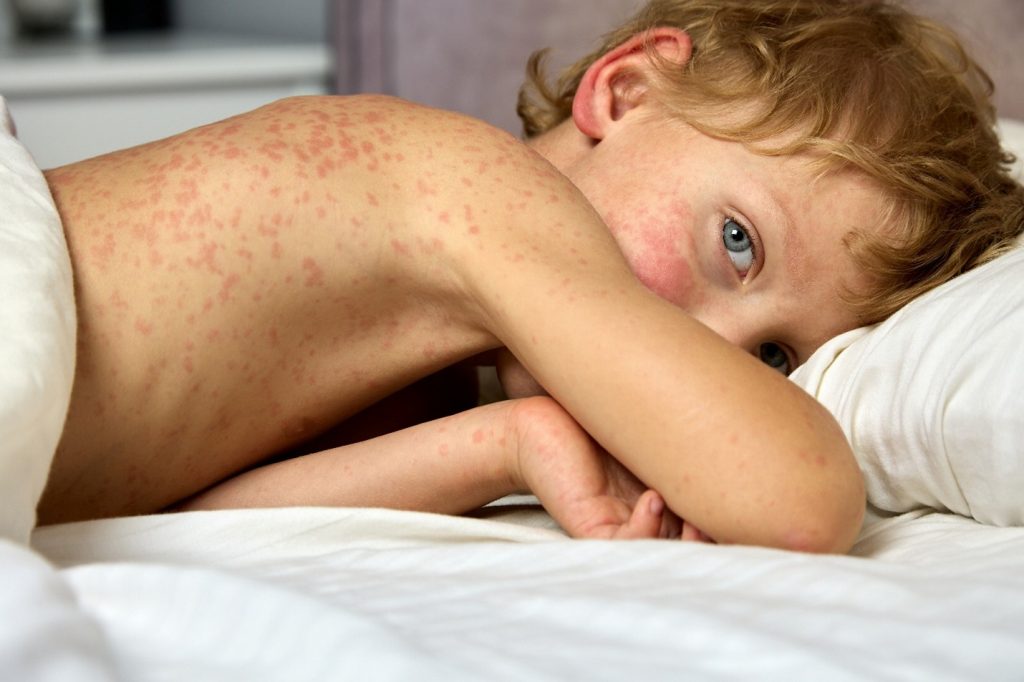
- The Symptoms: The illness typically begins with a high fever, cough, runny nose (coryza), and red, watery eyes (conjunctivitis). A few days later, a characteristic red, blotchy rash appears, usually starting on the face and hairline before spreading downward to the chest, back, and limbs.
- Transmission: It spreads primarily through airborne droplets when an infected person coughs or sneezes. The virus is so hardy that it can linger in the air or on surfaces for up to two hours after an infected person has left a room. If an unvaccinated person breathes that air or touches a contaminated surface and then their face, infection is almost certain.
Why Is Measles Dangerous?
While many people recover fully within a couple of weeks, measles can trigger severe, life-threatening complications. It is particularly dangerous for infants, young children under five, pregnant individuals, and anyone with a compromised immune system.
- Severe Secondary Infections: Measles temporarily suppresses the immune system—a phenomenon scientists call “immune amnesia,” where the body can forget previous immunities to other germs. This leaves patients wide open to severe secondary infections like bacterial pneumonia (the most common cause of death from measles in young children) and painful ear infections that can lead to permanent hearing loss.
- Acute Encephalitis: Roughly 1 in every 1,000 measles cases leads to encephalitis, an acute inflammation of the brain. This can result in convulsions, seizures, and permanent intellectual or neurological damage.
- Subacute Sclerosing Panencephalitis (SSPE): Though rare, SSPE is a fatal degenerative disease of the central nervous system that can develop years after a seemingly normal recovery from a measles infection.
- Pregnancy Complications: If contracted during pregnancy, measles increases the risk of premature labor, low birth weight, or pregnancy loss.
The Power of Prevention
Because there is no specific antiviral treatment to cure measles once it takes hold, medical care focuses entirely on managing symptoms and preventing complications (such as administering vitamin A to reduce severity).
This makes prevention through vaccination vital. The Measles, Mumps, and Rubella (MMR) vaccine provides safe, highly effective, and long-lasting protection. Maintaining high community vaccination rates creates a shield of herd immunity, protecting vulnerable infants and individuals who cannot receive the vaccine for medical reasons.
Leave a Reply