Let’s be honest: when your doctor mentions a colorectal cancer screening, your mind likely immediately jumps to dreading the preparation or postponing the appointment. Millions of adults skip routine checks simply because traditional methods feel invasive, inconvenient, or downright uncomfortable.
In fact, roughly a third of eligible adults remain overdue for their recommended screenings. But medical innovation is shifting the narrative, proving that the future of preventative health might be as routine as a standard arm poke during your annual check-up.
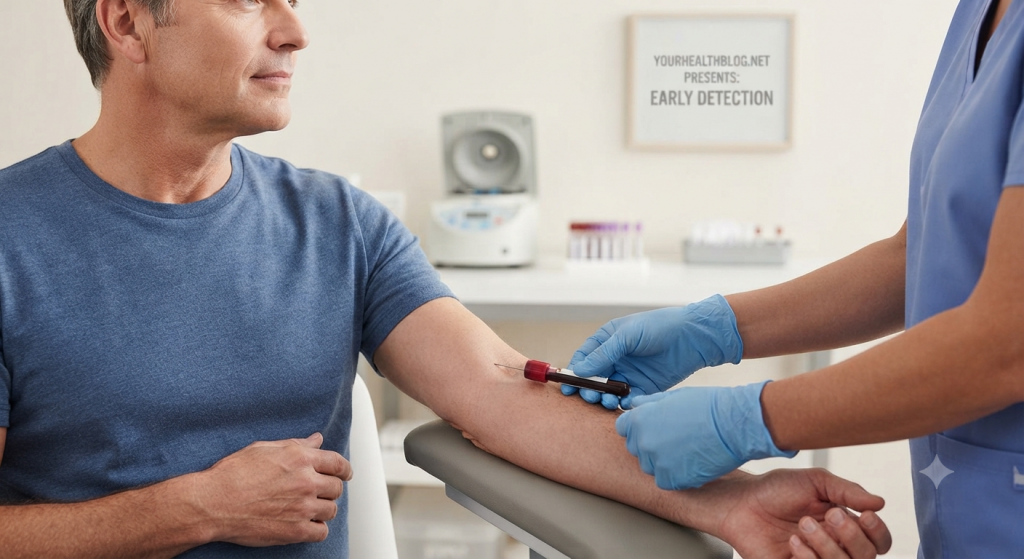
A Game-Changer for Compliance
Recent regulatory approvals—including new blood-based screening tests like SimpleScreen CRC and Shield—have officially shaken up how medical guidelines view early detection. Designed for average-risk adults aged 45 and older, these tests analyze tiny fragments of cell-free DNA circulating in the bloodstream that are shed by tumors.
The primary philosophy driving this shift is simple: the best screening test is the one a person actually completes.
For years, doctors faced a stubborn roadblock of patient hesitation. By introducing a non-invasive blood option that requires no special prep or time off work, healthcare providers can finally bridge the gap for millions of people who otherwise would have skipped testing entirely.
What You Need to Know: The Fine Print
While a routine blood draw sounds infinitely easier, medical experts emphasize that it comes with a few important caveats:
- It’s a Screening, Not a Diagnosis: A blood test acts as an early warning system. If a test comes back positive, it doesn’t automatically mean cancer is present—it means your doctor will strongly recommend a follow-up colonoscopy to take a closer look.
- Not a Replacement for Gold Standards: While highly effective at catching markers of disease, blood tests are generally positioned as an alternative option primarily meant for individuals who continuously decline or delay traditional screenings.
- Catching it Early: Because colorectal cancer is exceptionally treatable and preventable when caught in its early stages, lowering the barrier to entry is expected to bring a massive wave of previously un-screened adults into the healthcare fold.
[ Blood Test Could Predict Breast Cancer ]
Making Healthcare Less Intimidating
Preventative medicine only works if people participate. As medical technology evolves to fit more naturally into our busy lives, overcoming the mental hurdle of cancer screening is getting easier.
Next time you’re sitting in the chair for a routine cholesterol check or annual blood work, the conversation about protecting your long-term health might just start with a simple vial of blood—proving that taking care of your body doesn’t always have to be a pain.
Leave a Reply