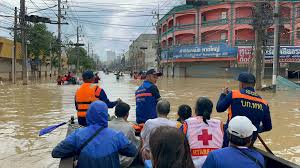
The city of Hat Yai, a major hub in southern Thailand with a population of over 700,000, is facing a severe healthcare crisis following recent catastrophic flooding. The disaster has crippled the city’s medical infrastructure, leaving the massive population dependent on a single operational hospital.
Four Out of Five Major Hospitals Inoperable
Hat Yai typically relies on five major hospitals—both public and private—with a combined capacity exceeding 2,000 beds, supported by over 200 private clinics. This comprehensive system served not only local residents but also surrounding districts.
However, the floodwaters have devastated four of the five central hospitals. These facilities, located in the heart of the city, suffered severe water damage that submerged critical areas, rendering them inoperable. Essential services were lost, including:
- Diagnostic imaging departments (CT scans and MRIs).
- Patient rooms.
- Vital infrastructure (electricity and water systems).
The only facility that has managed to remain functional is Songklanagarind Hospital, which is situated on the outskirts of the city. The damage has also heavily affected over 200 private clinics, further straining the remaining resources.
The Critical Burden on a Single Facility
The Assistant Dean of Human Resources at the Faculty of Medicine, Prince of Songkla University, highlighted the critical situation, asking, “How much longer can a single hospital shoulder the burden of caring for an entire city of 700,000 people?”
Songklanagarind Hospital is now struggling to manage a massive influx of patients, handling not only emergency care but also the backlog of routine and specialist cases from the entire region.
Urgent Call for Collaborative Action
To mitigate the crisis, a crucial five-point plan has been proposed, emphasizing cooperation between the government, healthcare providers, and the public:
- Collaborative Healthcare Workforce: Creating a “borderless healthcare team” to allow medical staff from the damaged hospitals to temporarily work at Songklanagarind Hospital, ensuring maximum utilization of available human resources.
- Medical Resources and Donations: An urgent appeal for donations of essential medical supplies, equipment, and medicines to replenish depleted hospital stocks.
- Public Self-Care: Encouraging the public to exercise discretion when seeking medical care, especially during nighttime hours, to assess the urgency of their condition and allow existing staff to rest and recharge.
- Effective Leadership: A call for strong government leadership to act promptly and efficiently in providing the necessary logistical support and resources for the functioning hospital.
- Tax Relief: An appeal for the government to consider tax exemptions to support flood victims struggling to rebuild their homes and livelihoods.
The incident is serving as a stark reminder of the vulnerability of urban healthcare infrastructure to major environmental disasters and underscores the need for robust crisis response planning.
Leave a Reply